The Shifting Sands: First Round Projections
The race for Paris City Hall is heating up, with recent polls painting a complex picture ahead of the crucial second round of the municipal elections. Far from a straightforward contest, the capital's electorate appears poised for a multi-candidate showdown, where alliances, withdrawals, and strategic voting will dictate the outcome. The latest
Paris Mayoral Polls: Grégoire Leads Dati Ahead of First Round provided a glimpse into the potential first-round results, setting the stage for an intense political battle.
According to a comprehensive
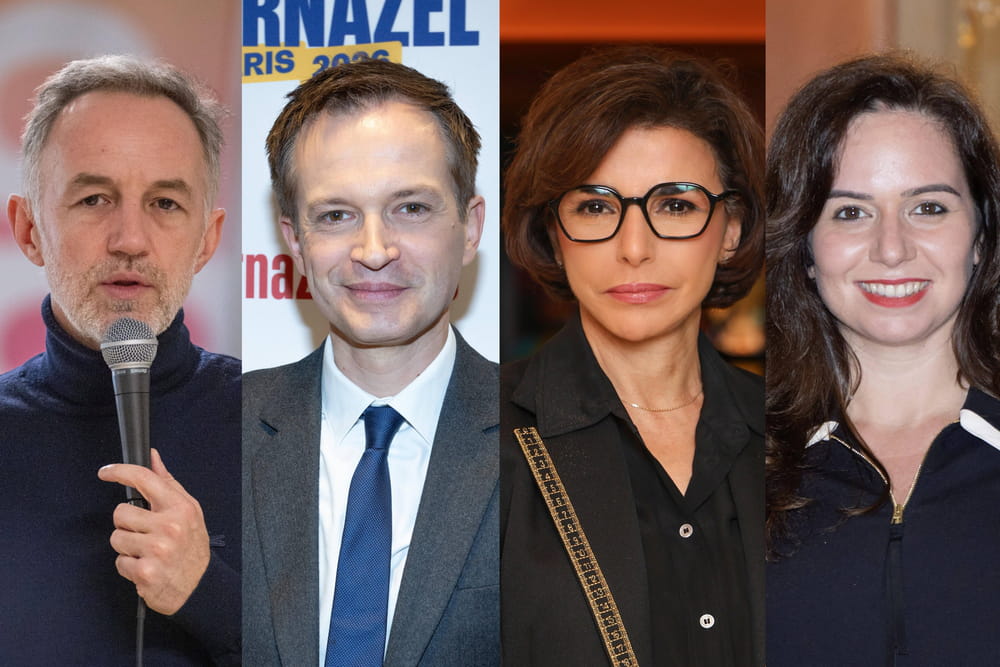
sondage municipales paris conducted by Elabe/Berger-Levrault for BFMTV, La Tribune Dimanche, and Le Figaro, Socialist candidate Emmanuel Grégoire, representing the united left (excluding LFI), is positioned to lead in the first round with an estimated 32% of the vote. He would be trailed by Rachida Dati, the candidate backed by LR, Modem, and UDI, who is projected to secure 26.5% of the intentions.
However, the real intrigue begins beyond these two frontrunners. The 10% qualification threshold for the second round means that several other candidates are viable contenders, potentially leading to a rare "quinquangulaire" – a five-way race. Sarah Knafo, representing Reconquête, shows a strong dynamic, polling at 13.5% (an increase from earlier projections). Pierre-Yves Bournazel of Horizons and Sophia Chikirou of La France Insoumise (LFI) are also expected to cross this vital threshold, adding layers of complexity to the subsequent round. Their decisions regarding alliances or maintaining their candidacies will be pivotal.
Crucial Alliances: The Second Round Chessboard
With no candidate expected to achieve an outright majority in the first round, the second round transforms into a high-stakes game of political chess. The outcomes are not just about individual candidate popularity but heavily depend on the ability to forge alliances, consolidate votes, or, conversely, benefit from the fragmentation of opponents. The "outsider" candidates – Knafo, Bournazel, and Chikirou – hold significant sway, effectively acting as kingmakers (or queenmakers) whose strategies could completely alter the electoral map.
An exclusive
sondage municipales paris by OpinionWay-Hexagone further illuminates these intricate dynamics, underscoring that while the left might be numerically a minority in the first round, the second-round configurations could still secure Emmanuel Grégoire a victory. This highlights the crucial difference between cumulative first-round votes and the strategic maneuvering required for a run-off.
Key Scenarios and Their Impact
The OpinionWay-Hexagone poll outlines several compelling scenarios for the second round, each with distinct implications for the main contenders:
*
Scenario 1: Right/Center Unity & Chikirou's Persistent Presence (Dati's Path to Victory)
* This scenario, often dubbed "Hypothesis 5," paints the clearest path to victory for Rachida Dati. If Pierre-Yves Bournazel (Horizons-Renaissance) and Sarah Knafo (Reconquête) decide to withdraw their candidacies and rally behind Dati, *and* Sophia Chikirou (LFI) maintains her presence, Dati's coalition could win significantly with 49% of the votes, against Emmanuel Grégoire's 40% and Chikirou's 11%. This outcome relies on the right and center "playing collective" and Knafo upholding her pledge not to inadvertently hand victory to the left. The consolidation of center-right and far-right votes, coupled with the continued fragmentation of the left, provides a strong advantage for Dati.
*
Scenario 2: The "Chikirou Factor" – Dati's Unlikely Ally
* Surprisingly, the poll suggests that Sophia Chikirou's continued presence in the second round is Rachida Dati's "best ally" (Hypothesis 2). Should Chikirou maintain her candidacy, even if Bournazel is also present, Dati could secure 40% of the vote, surpassing Grégoire's 34%. This is largely due to Grégoire's firm declaration against an alliance with LFI, stating "C'est non!" This refusal prevents the full consolidation of left-wing votes, inadvertently splitting the progressive electorate to Dati's benefit. For Dati, this means less pressure to build broad alliances on her own side if the left remains divided.
*
Scenario 3: A Quadrangulaire (Grégoire's Victory)
* The "worst-case scenario" for Rachida Dati is a four-way race (Hypothesis 3) where both Bournazel and Knafo decide to maintain their candidacies, along with Grégoire and Dati. In this fragmented contest, Emmanuel Grégoire would emerge victorious with 41% of the votes. This outcome highlights how a divided right-wing and far-right vote, unable to consolidate around Dati, would inadvertently benefit the leading left candidate. It underscores the importance of strategic withdrawals for the right-leaning parties.
*
Scenario 4: A Nail-Biting Triangulaire (Grégoire-Dati-Bournazel)
* In a three-way race involving Grégoire, Dati, and Bournazel, the results would be incredibly tight, with both Grégoire and Dati polling at 43% each, and Bournazel at 14%. Such a scenario would lead to an election decided by the narrowest of margins, potentially coming down to a few hundred votes or even a recount. The outcome would be highly uncertain, reflecting the deep divisions and the lack of a dominant force.
The Challenges Ahead: Grégoire vs. Dati
The Parisian municipal elections are not just about policy; they are a masterclass in electoral strategy. Both Emmanuel Grégoire and Rachida Dati face unique challenges and opportunities in this dynamic environment.
Emmanuel Grégoire's Path: Grégoire starts with a strong lead in the first round and appears to have multiple paths to victory in various second-round scenarios. His challenge, however, is consolidating the broader left vote without alienating his centrist allies or compromising his principles. The OpinionWay poll points to a "weak reserve of votes" for Grégoire if Sophia Chikirou maintains her candidacy, due to his categorical refusal of an LFI alliance. His strategy must focus on maximizing turnout from his existing base and attracting moderate voters who might be wary of a fragmented right.
Rachida Dati's Opportunity: While trailing in the first round, Dati has a clear path to victory if the right and center can unite. Her biggest hurdle is convincing Bournazel and Knafo to withdraw and throw their support behind her. The referenced
Paris Mayoral Race: Can the Right Unite to Overtake Grégoire? article delves deeper into this precise challenge. Dati also ironically benefits from the continued presence of Sophia Chikirou, as this splits the left-wing vote. Her campaign will likely focus on emphasizing the need for a change in leadership and presenting a unified front against the current left administration.
Navigating the Electoral Maze: Tips for Voters and Candidates
For the Parisian electorate, understanding these complex dynamics is key to making an informed decision. The concept of strategic voting takes on paramount importance in a multi-candidate run-off.
*
For Voters:
*
Understand the Alliances: Voters should pay close attention to which candidates might withdraw or form alliances between the two rounds. A vote for a "smaller" candidate in the first round could significantly influence the second-round configuration.
*
Consider Second-Round Impact: If your preferred candidate is unlikely to win, consider how your vote in the second round could prevent an outcome you strongly oppose or favor one that aligns more closely with your values, even if it's for a less ideal candidate.
*
Turnout is Critical: In such tight races, every vote counts. High turnout from specific blocs can swing an election.
*
For Candidates:
*
Negotiation is Paramount: The period between the first and second rounds is crucial for intense negotiations. Parties must be willing to compromise on policy or future appointments to secure crucial endorsements.
*
Clear Messaging: Candidates must clearly communicate their second-round strategies – whether it's a call for unity, an endorsement, or a decision to maintain their candidacy – to avoid confusing their base.
*
Voter Mobilization: Beyond alliances, the ability to motivate supporters to return to the polls for the second round will be decisive, especially given the potentially narrow margins highlighted by the
sondage municipales paris.
The Parisian municipal elections are shaping up to be one of the most unpredictable political contests in recent memory. The latest
sondage municipales paris analyses highlight an intricate web of alliances and voter intentions that make any definitive prediction challenging. From Emmanuel Grégoire's need to consolidate the left amidst LFI's challenge, to Rachida Dati's imperative to unite the right and center, the outcome hinges on strategic choices, last-minute negotiations, and the electorate's ultimate decisions. The stage is set for a thrilling second round, where every move on the political chessboard will matter.