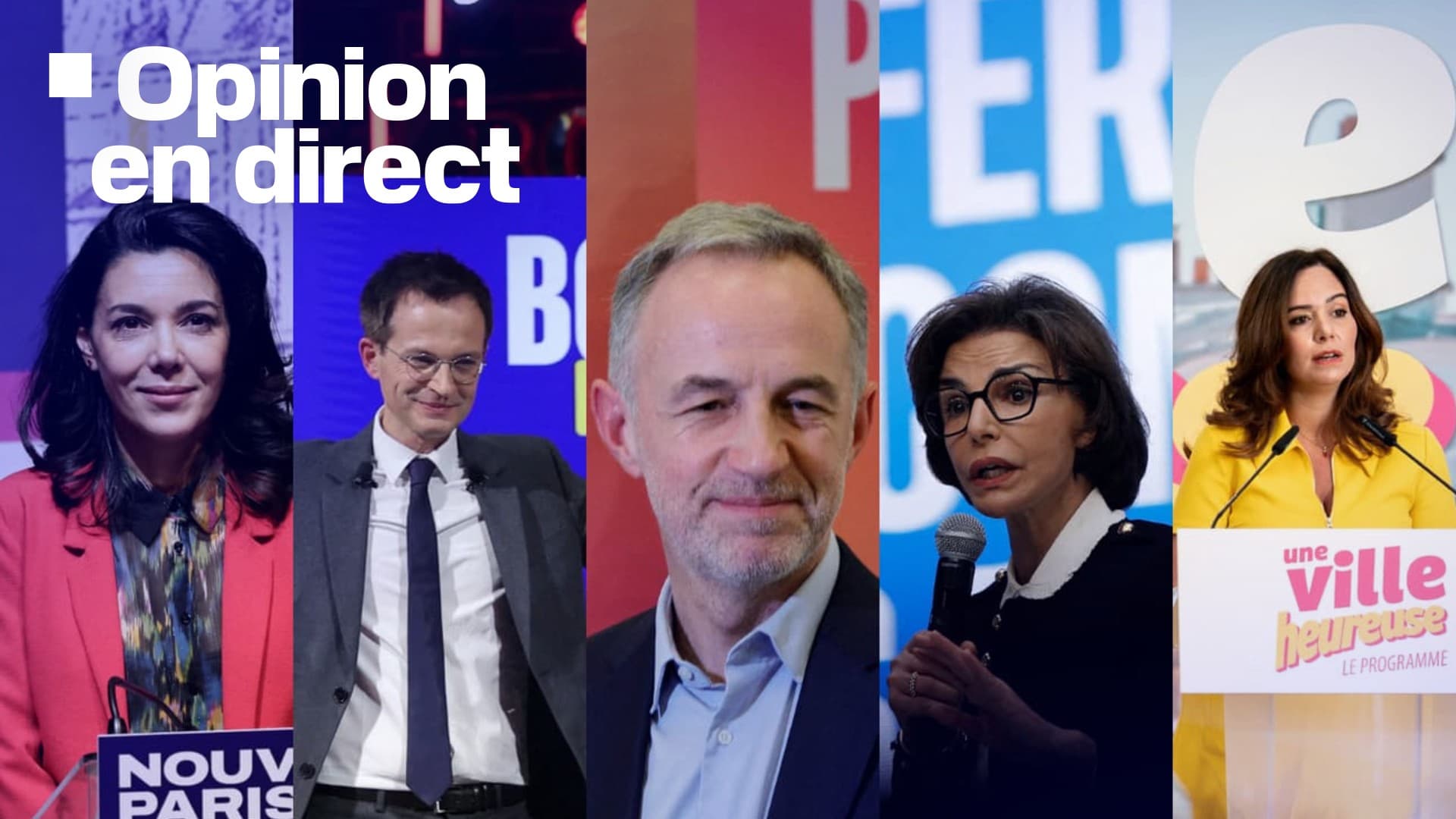
Paris Mayoral Polls: Grégoire Leads Dati Ahead of First Round, but Second Round Scenarios Remain Unpredictable
The race for Paris City Hall is heating up, with recent surveys painting a complex picture of the upcoming municipal elections. While early indications from a new
sondage municipales paris suggest a lead for socialist candidate Emmanuel Grégoire in the first round, the path to victory in the capital remains highly uncertain, marked by the potential for strategic alliances and unexpected twists in the second round. Parisians are bracing for an electoral contest that could see the city's political landscape shift significantly or continue its established left-leaning trajectory.
The Shifting Sands of the First Round: Grégoire Takes an Early Lead
According to a detailed opinion poll conducted by Elabe/Berger-Levrault for BFMTV, La Tribune Dimanche, and Le Figaro, Emmanuel Grégoire, representing the union of the left (excluding La France Insoumise - LFI), currently holds the top position in first-round voting intentions. The former first deputy mayor to Anne Hidalgo is credited with a significant
32% of the vote. This places him notably ahead of his main conservative rival, Rachida Dati, who is the candidate supported by Les Républicains (LR), MoDem, and UDI, and stands at
26.5%.
Beyond this leading duo, the poll highlights the strong possibility of multiple candidates crossing the crucial 10% threshold required to qualify for the second round. This scenario, often dubbed a "quinquangulaire" (a five-way race), underscores the fragmented nature of Parisian politics. Among those poised to qualify is Sarah Knafo for Reconquête, whose momentum appears to be growing, now polling at
13.5% – a notable increase from previous surveys. Other potential qualifiers include Pierre-Yves Bournazel for Horizons and Sophia Chikirou for LFI, whose exact percentages are not detailed in this particular poll but are considered significant enough to influence the outcome.
These first-round figures indicate that while the left might appear strong on paper, the presence of multiple candidates across the political spectrum could dilute votes and make second-round projections particularly challenging. The initial lead of Grégoire is a clear signal of the electorate's current sentiment but does not guarantee an easy path to victory, especially given the strategic manoeuvring expected between rounds. This initial
sondage municipales paris sets the stage for a compelling electoral battle where every percentage point will count.
Second Round Scenarios: A Complex Dance of Alliances
The true complexity of the Parisian mayoral race becomes apparent when examining the potential second-round scenarios. A separate exclusive
sondage municipales paris by OpinionWay-Hexagone reveals that while the left might be numerically strong in the first round, its overall vote base in Paris is actually a minority. This paradox means that alliances and voter transfers will be absolutely critical.
One of the most striking findings from this poll is that a unified right and center could potentially clinch victory. For instance, in a scenario where Pierre-Yves Bournazel (Horizons-Renaissance) and Sarah Knafo (Reconquête) withdraw, and Sophia Chikirou (LFI) remains in the race, a united right and center could garner
49% of the votes, comfortably ahead of Emmanuel Grégoire at
40%, with Sophia Chikirou retaining
11%. This outcome hinges on a collective strategy from the right-wing parties, a historical challenge in Paris, and Knafo's commitment to preventing a left-wing victory. This highlights the fluidity of voter allegiances and the importance of strategic withdrawals. For a deeper dive into these complex dynamics, explore
Paris Elections: Second Round Scenarios & Crucial Alliances.
Interestingly, the poll also suggests that Sophia Chikirou could inadvertently become Rachida Dati's "best ally." If Chikirou maintains her candidacy in the second round, even with Bournazel also present, Dati could secure a win with
40% of the votes against Grégoire's
34%. This counter-intuitive outcome underscores the fragmentation of the left-wing vote; LFI voters might be less inclined to transfer their support to the mainstream socialist candidate, thereby siphoning votes that would otherwise benefit Grégoire. This scenario is made more probable by Grégoire's firm declaration against any alliance with LFI between rounds: "C'est non!"
Conversely, the worst-case scenario for Rachida Dati involves a quadrangulaire (four-way race) where Bournazel and Knafo both maintain their candidacies. In this configuration, Emmanuel Grégoire emerges victorious with
41% of the vote. A triangulaire (three-way race) involving Grégoire, Dati, and Bournazel shows an incredibly tight contest, with both Grégoire and Dati tied at
43%, and Bournazel at
14%, pointing to a photo-finish election. These varied configurations reveal that while Grégoire currently leads, his victory is far from assured, constrained by a potentially limited reservoir of transferable votes in the second round due to the likely maintenance of the LFI candidate.
The Crucial Role of "Outsider" Candidates and Strategic Withdrawals
In the high-stakes Paris mayoral race, candidates beyond the leading duo of Grégoire and Dati — often termed "outsiders" or "arbiters" — hold disproportionate influence. Sarah Knafo (Reconquête), Pierre-Yves Bournazel (Horizons), and Sophia Chikirou (LFI) are not just vying for their own electoral success; their decisions regarding alliances or maintaining their candidacies in the second round can single-handedly determine the winner.
For the right and center, the path to victory seems clear: unity. As the polls demonstrate, a collective effort, potentially involving strategic withdrawals from candidates like Bournazel and Knafo, could consolidate votes around Rachida Dati and lead to a decisive win. Knafo's stated commitment to preventing a left-wing victory underscores this potential for strategic alignment. However, this unity is historically challenging to achieve in Parisian politics, where ideological nuances and personal ambitions often prevent straightforward cooperation. The question for the right is whether they can overcome these traditional hurdles and "play collective" to seize an opportunity that polling suggests is within reach. For more analysis on this, refer to
Paris Mayoral Race: Can the Right Unite to Overtake Grégoire?
On the left, Emmanuel Grégoire's staunch refusal to ally with LFI, while perhaps ideologically consistent, creates a challenging situation. By rejecting a broad left-wing front, he risks fragmenting the progressive vote, especially if Sophia Chikirou maintains her candidacy. This makes the "outsider" LFI candidate a de facto advantage for Rachida Dati, highlighting the delicate balance between ideological purity and electoral pragmatism. Voters, therefore, face a nuanced decision, weighing their first-round preferences against the potential impacts of their chosen candidate's second-round strategy. Understanding these strategic implications is key to interpreting the true meaning of any
sondage municipales paris.
Analysis and Future Outlook: A City Divided, A Choice Defined
The current political landscape in Paris, as illuminated by these comprehensive surveys, points to an election that will be decided more by strategic alliances and voter transfer dynamics than by overwhelming first-round majorities. While Emmanuel Grégoire enjoys a lead, his limited "vote reservoir" in the second round, largely due to the likely continued presence of LFI, presents a significant hurdle. For Rachida Dati, the path to victory is equally clear yet historically difficult: achieving a unified front across the various factions of the right and center.
This election is not just about local governance; it reflects broader national political trends and ideological divides. Paris, traditionally a bastion of left-wing politics for over two decades, is witnessing a robust challenge from the right, invigorated by the prospect of a fragmented left. The role of smaller parties and their candidates—Knafo, Bournazel, Chikirou—cannot be overstated. They are not merely electoral footnotes but crucial arbiters whose decisions will shape the future of the capital.
For Parisian voters, understanding these complex dynamics is paramount. It means looking beyond first-round intentions and considering the second-round implications of each vote. Will strategic voting become a dominant factor? Will ideological commitments override pragmatic alliances? The answers to these questions will define the next six years for one of the world's most iconic cities.
In conclusion, the latest
sondage municipales paris clearly indicates a tightly contested race where Emmanuel Grégoire currently holds an advantage in the first round, but the ultimate outcome remains highly unpredictable. The potential for a multi-candidate second round, the strategic calculations around alliances and withdrawals, and the inherent challenges of voter transfer will keep Parisians on the edge of their seats. The upcoming municipal elections are poised to be a captivating display of political strategy, voter sentiment, and the enduring quest for leadership in the heart of France.